

 Nederlands
 Türkçe
Running a Dutch BV comes with ongoing accounting, tax, reporting, and compliance responsibilities. For foreign business owners, understanding these requirements is essential to avoid missed deadlines, administrative errors, and unnecessary compliance risks.
From bookkeeping and tax filings to annual accounts and UBO requirements, every part of your Dutch BV’s administration needs to be handled correctly. Working with experienced Dutch BV accounting services can help you stay compliant while focusing on running and growing your business in the Netherlands.
This checklist explains the key Dutch BV accounting requirements foreign-owned companies should understand and provides a practical overview of the main obligations.
Dutch BV Accounting: What Foreign Owners Need to Get Right
A Dutch BV is required to maintain proper financial administration and comply with Dutch accounting and tax regulations. These obligations apply whether the company is fully operational, newly established, or owned by shareholders based outside the Netherlands. For foreign owners, the challenge is often understanding which requirements apply, when filings are due, and which records must be maintained.
Keeping these obligations organized from the beginning can reduce compliance risks and make it easier to manage your company remotely.
Running a Dutch BV? Start With These Bookkeeping Requirements
Every Dutch BV must maintain accurate and up-to-date financial records. This includes recording business transactions, maintaining supporting documentation, and ensuring that the administration provides a clear picture of the company’s financial position.
Your bookkeeping should generally cover:
- Sales and purchase invoices
- Bank transactions
- Business expenses
- Accounts receivable and payable
- Payroll records, where applicable
- VAT-related transactions
- Fixed assets
- Loans and shareholder transactions
- Supporting financial documentation
Dutch businesses are generally required to retain their administration for seven years. Certain records may be subject to different retention periods depending on their nature.
For foreign-owned companies, keeping the administration properly organized is particularly important when directors or shareholders manage the business from outside the Netherlands.

Which Taxes Does Your Dutch BV Need to Handle?
Accounting and tax compliance are closely connected. Your Dutch BV may have several tax obligations depending on its activities, employees, transactions, and ownership structure.
Corporate Income Tax
A Dutch BV is generally subject to Dutch corporate income tax on its taxable profits. For 2026, the corporate income tax rate is 19% on taxable profit up to €200,000 and 25.8% on taxable profit above €200,000.
You can learn more about the applicable thresholds and rules in our guide to the Netherlands corporate tax rate.
VAT
If your Dutch BV carries out activities subject to VAT, it may need to register for VAT and submit periodic VAT returns.
The frequency and requirements depend on the company’s activities and circumstances. Correctly recording VAT on sales and purchases is therefore an important part of ongoing bookkeeping.
If you are setting up a Dutch business, our guide on how to get a VAT number in the Netherlands provides additional information.
Payroll Taxes
If your Dutch BV employs staff or has payroll obligations, payroll administration and related tax filings must also be handled correctly.
This can include salary administration, payroll tax withholding, and required reporting.
Dividend Withholding Tax
Dutch BVs may also have dividend withholding tax obligations when distributing dividends. The applicable treatment can depend on the shareholders, ownership structure, and any relevant tax rules or treaties.
DGA Salary Rules: What Foreign BV Owners Should Know
If you are a director and substantial shareholder of a Dutch BV, the customary salary rules may apply.
The Dutch tax system generally requires a director-major shareholder (DGA) to receive a customary salary when the relevant conditions are met.
The applicable salary depends on factors such as the role, comparable employment, and the rules in force for the relevant tax year.
Because this area can affect both payroll and corporate tax compliance, foreign owners should make sure the salary arrangement is assessed correctly rather than treating it as a standard employee salary decision.
Annual Accounts: What Does Your Dutch BV Need to File?
Preparing and filing annual accounts is another important Dutch BV compliance obligation.
Annual accounts provide information about the company’s financial position and performance and may need to be filed with the Dutch Chamber of Commerce (KvK), depending on the company’s size and applicable requirements.
The accounts may include financial statements such as:
- Balance sheet
- Profit and loss statement
- Notes to the financial statements
- Other information required under the applicable reporting rules
The exact reporting requirements can differ depending on the size and structure of the company. If you need more detail, our guide to filing annual accounts in the Netherlands explains the process and key considerations.
UBO Registration: A Requirement Foreign Owners Can’t Overlook
Dutch companies are generally required to provide information about their ultimate beneficial owners (UBOs). The UBO register is designed to provide transparency about who ultimately owns or controls a company.
For foreign-owned BVs, ownership structures can sometimes involve multiple shareholders, holding companies, or international entities. This makes it especially important to ensure that the UBO information is accurate and kept up to date. Changes in ownership or control may require the company to update its registration.
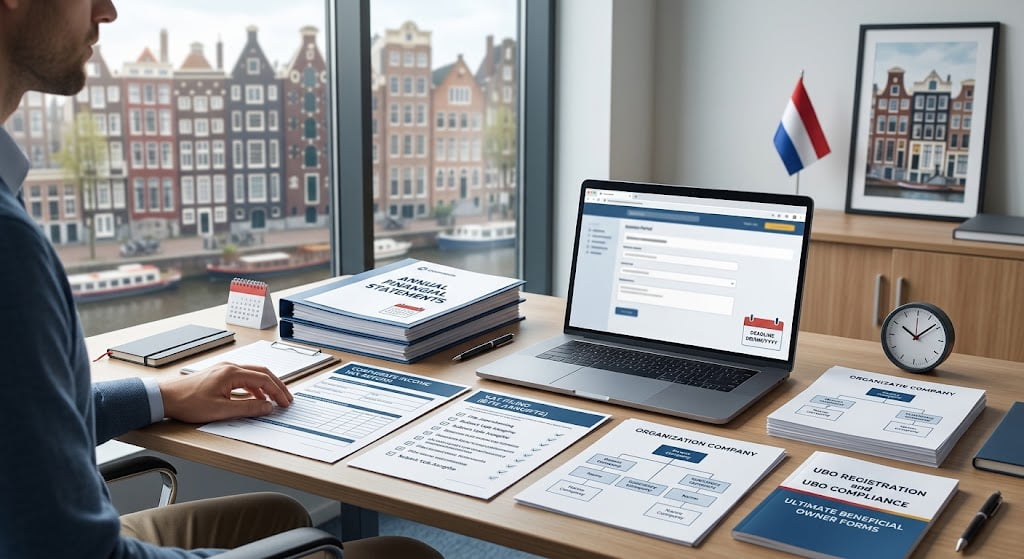
Dutch BV Compliance Deadlines at a Glance
Keeping track of different filing deadlines is one of the most important parts of managing Dutch BV compliance.
| Requirement | Usually Filed With | Timing |
| Bookkeeping & administration | Company records | Ongoing |
| VAT returns | Dutch Tax Administration | Periodically |
| Corporate income tax return | Dutch Tax Administration | Annually |
| Payroll tax returns | Dutch Tax Administration | Periodically, if applicable |
| Annual accounts | KvK | After the financial year |
| UBO information | UBO Register | On registration/change |
The exact deadlines can depend on the company’s circumstances, financial year, size, and filing requirements. Foreign owners should therefore avoid relying on a generic calendar and instead maintain a compliance schedule specific to their Dutch BV.
7 Accounting Mistakes Foreign-Owned BVs Should Avoid
Foreign-owned companies can face additional administrative challenges when the directors or shareholders are based outside the Netherlands.
Common mistakes include:
- Missing tax filing deadlines
Late filings can create compliance problems and potentially lead to penalties. - Keeping incomplete records
Missing invoices, receipts, or transaction documentation can make accurate reporting difficult. - Ignoring VAT obligations
VAT registration and reporting requirements should be assessed based on the company’s activities. - Treating the DGA salary casually
Director-major shareholders should understand how the customary salary rules may apply. - Forgetting annual accounts
Annual accounts requirements should be included in the company’s recurring compliance calendar. - Not updating UBO information
Changes in ownership or control should be reflected where required. - Trying to manage everything without local support
Dutch accounting and compliance requirements can become difficult to manage when the company is operated remotely.
Managing Your Dutch BV From Abroad? When to Get Accounting Support
Managing a Dutch BV from another country can make routine accounting and compliance more complicated. You may need to coordinate bookkeeping, tax filings, annual accounts, payroll, VAT, and corporate documentation while also running your business.
This is where professional accounting support can make the process more structured.
Instead of dealing with multiple administrative tasks yourself, you can work with a local team that understands Dutch requirements and can help keep your financial administration organized.
For foreign-owned companies, the benefit is not simply outsourcing bookkeeping. It is having greater clarity over what needs to be done, when it needs to be done, and which records need to be maintained.
How Beyond Consultancy Helps You Stay on Top of Dutch BV Accounting
Beyond Consultancy provides accounting and bookkeeping support for companies operating in the Netherlands, including foreign businesses that need structured financial administration and compliance support. Its accounting services cover areas such as bookkeeping and financial administration, tax filings, financial reporting, digital accounting tools, and ongoing financial guidance.
For foreign business owners, this can provide a more centralized approach to managing Dutch financial obligations. Beyond Consultancy also supports clients with digital access to financial information and ongoing compliance support, helping business owners maintain greater visibility over their financial administration.
If you are looking for Dutch accounting services in the Netherlands, you can discuss your company’s requirements and accounting setup with the Beyond Consultancy team.
Ready to Take Dutch BV Accounting Off Your Plate?
Dutch BV accounting requirements do not stop after company formation. Bookkeeping, tax filings, annual accounts, payroll, VAT, and other compliance responsibilities continue throughout the life of the business.
For foreign owners, managing these obligations remotely can become time-consuming and difficult to coordinate.
If you want to discuss your Dutch BV accounting requirements, contact Beyond Consultancy to discuss your situation and find out how the team can support your business.
Frequently Asked Questions
Does every Dutch BV need bookkeeping?
Yes. A Dutch BV is required to maintain proper financial administration and supporting records. The administration should accurately reflect the company’s financial activities.
How long must a Dutch BV keep its accounting records?
Dutch businesses generally need to retain their administration for seven years. Specific requirements can vary depending on the type of record.
Does a foreign-owned Dutch BV pay corporate income tax?
Generally, yes. A Dutch BV is normally subject to Dutch corporate income tax on its taxable profits, regardless of whether its shareholders are based in the Netherlands or abroad.
Does a Dutch BV need to file annual accounts?
Depending on the company’s size and applicable requirements, a Dutch BV may need to prepare and file annual accounts with the Dutch Chamber of Commerce.
Does a foreign director need to consider the DGA salary rules?
If the director is also a substantial shareholder, the customary salary rules may apply. The appropriate treatment should be assessed based on the company and director’s circumstances.
Can a foreign-owned Dutch BV outsource its accounting?
Yes. Foreign-owned companies can work with professional accounting providers to manage bookkeeping, tax filings, reporting, and other financial administration requirements.
Why should foreign business owners use Dutch accounting support?
Local accounting support can help foreign owners understand Dutch requirements, maintain accurate records, manage filing obligations, and handle ongoing compliance while they focus on operating their business.
.png) Nederlands
